Boondock Cabins
Boondock Cabins is a carefully curated collection of contemporary retreat cabins, conceived as a low-impact architectural intervention within a secluded natural landscape.
Project Type: Luxury Cabin Retreat Development
Status: Concept Design
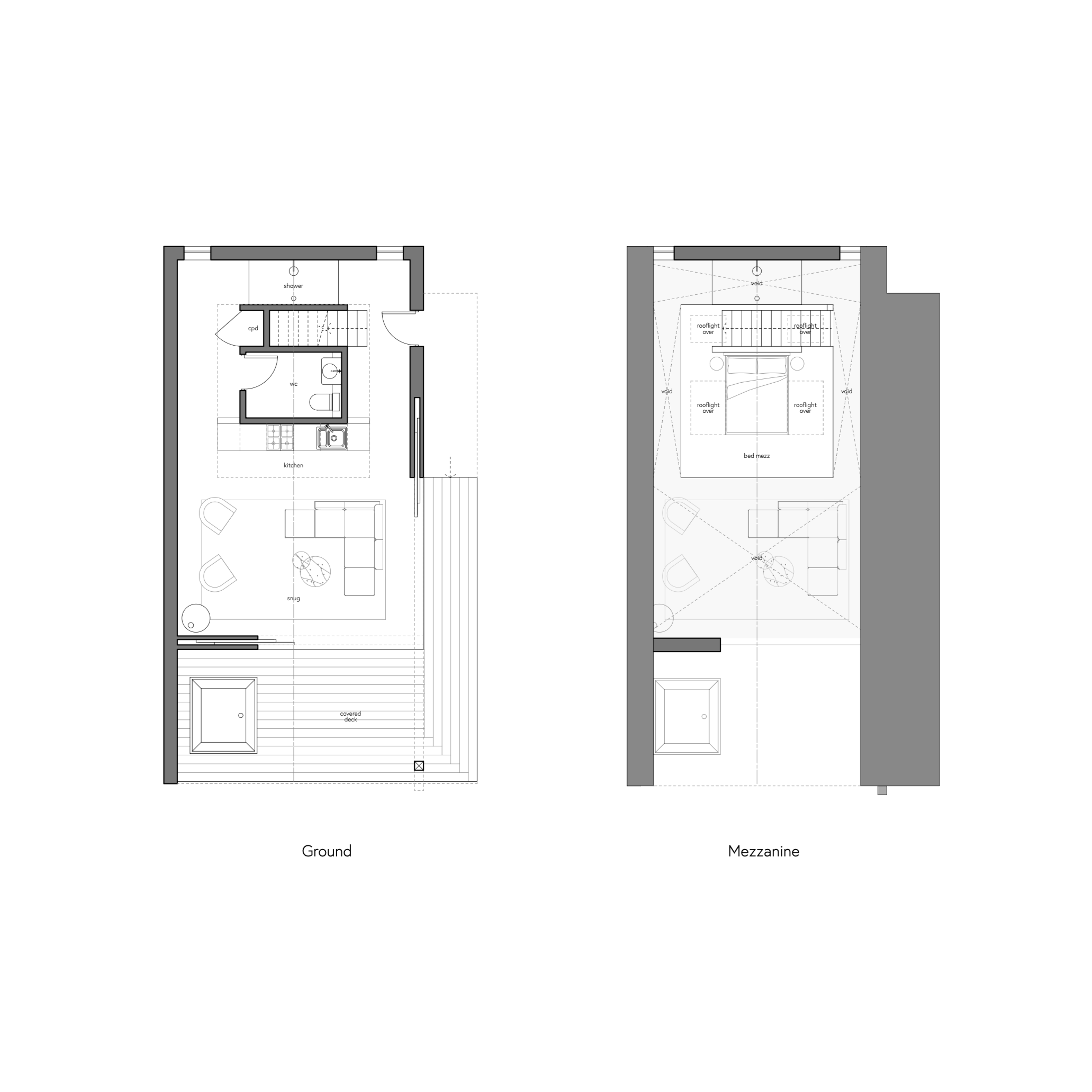
Accommodation: Boutique self-contained retreat cabins with mezzanine sleeping spaces
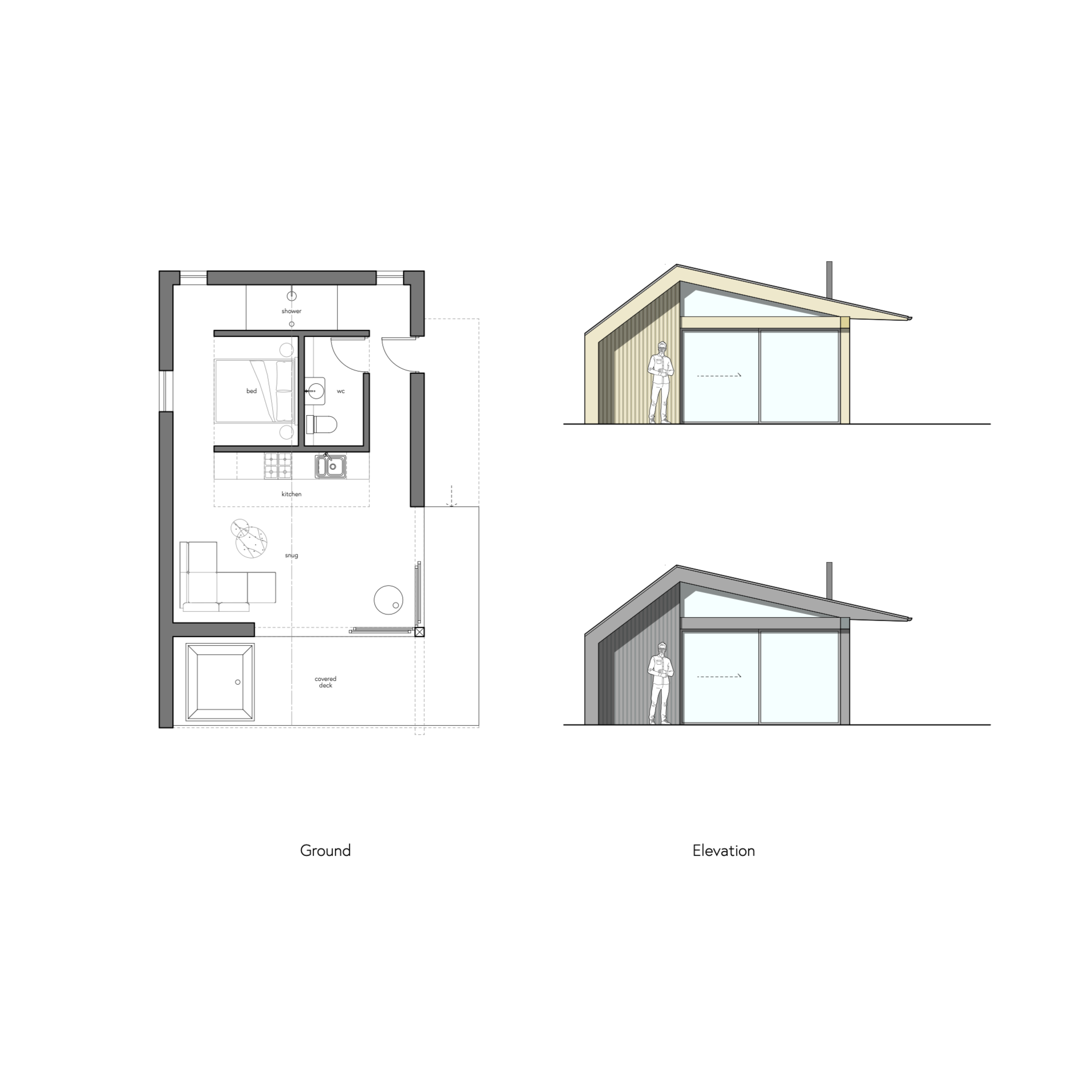
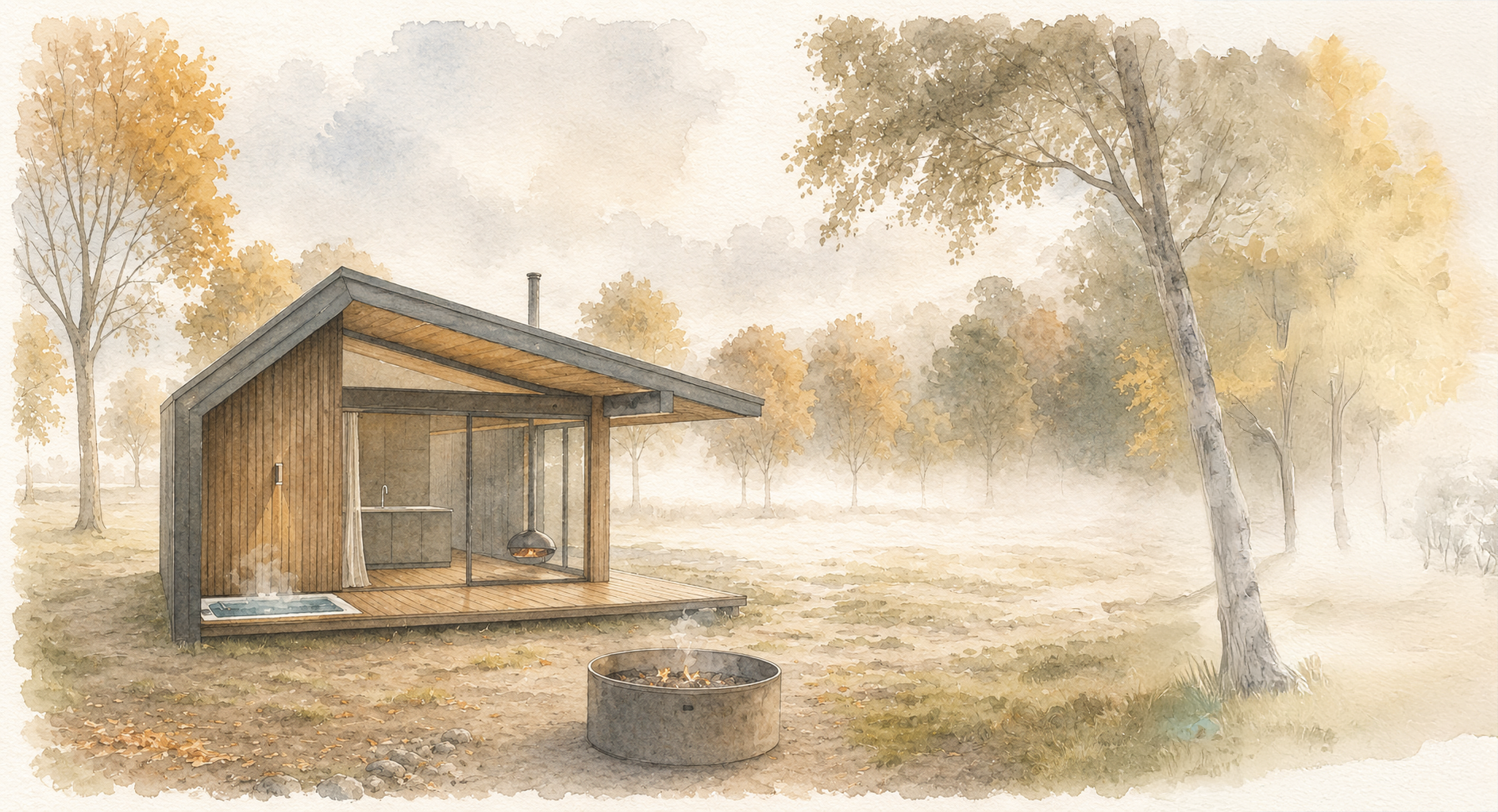
Living Spaces: Open-plan living spaces with double-height volumes, integrated kitchen areas, panoramic glazing and covered external terraces.
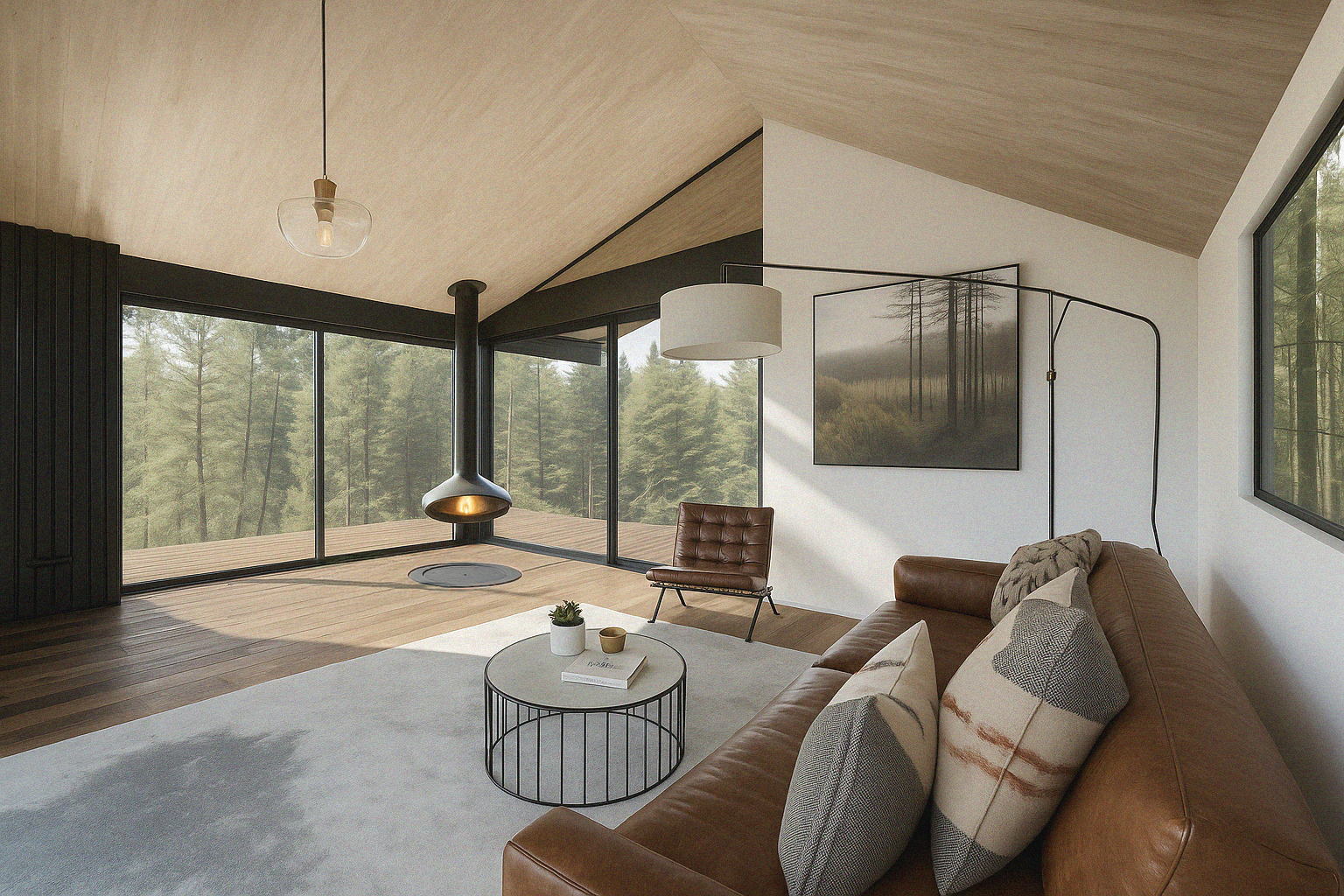
Key Features: Expressive exposed timber structure, cantilevered roof forms, suspended fireplaces, expansive sliding glazing, indoor–outdoor living, mezzanine sleeping platforms, private wellness terraces and landscape-led site planning.
Materials: Vertical timber cladding, exposed structural timber, standing seam metal roofing, natural timber interiors and large-format architectural glazing.
Sustainability: Low-impact compact footprints, passive solar orientation, fabric-first design principles and sensitive integration within the surrounding natural landscape.
The project explores the relationship between architecture and wilderness through a series of refined timber structures that sit lightly within their surroundings, prioritising immersion, atmosphere and connection to nature.
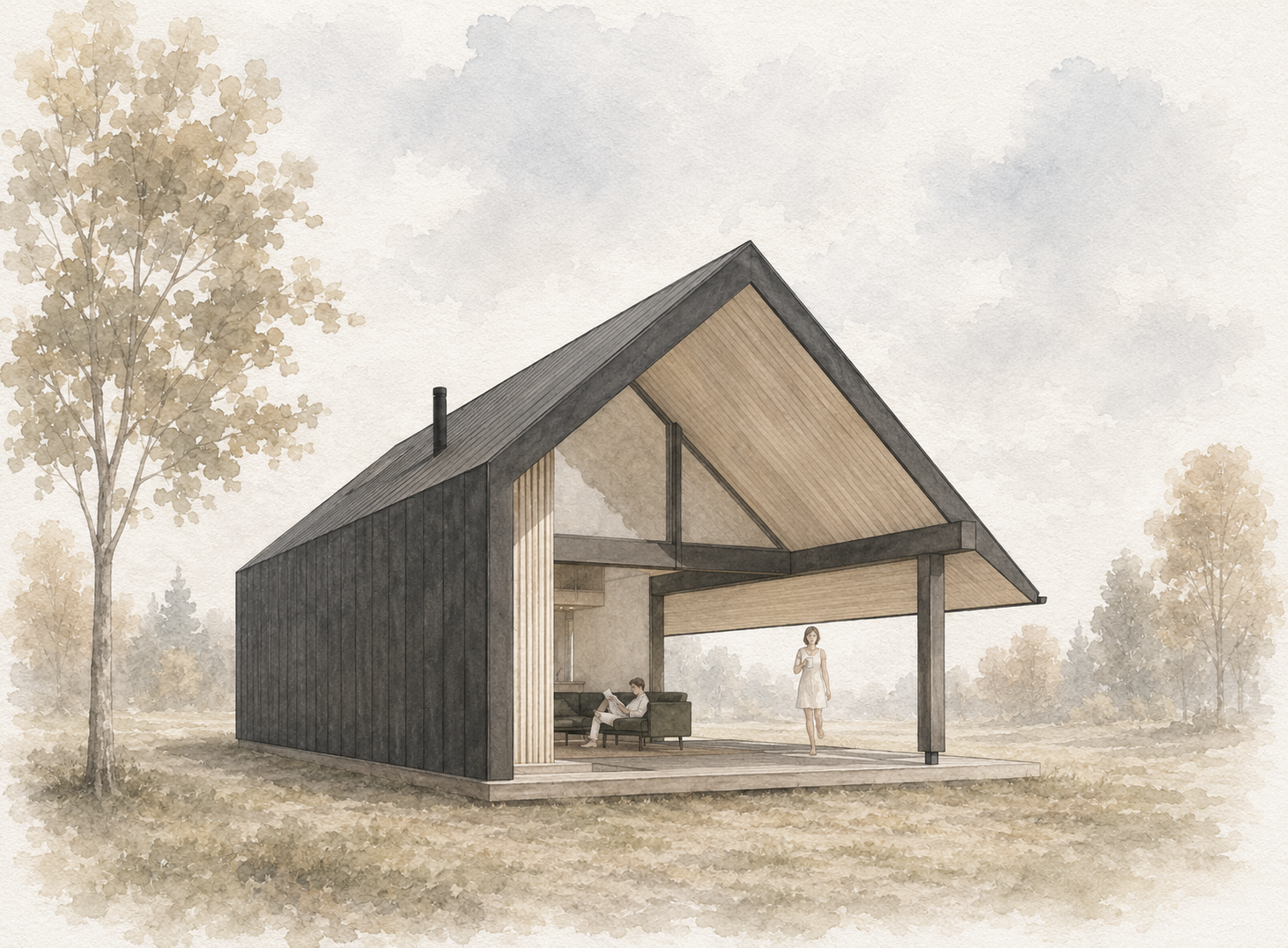
The cabins are defined by expressive exposed timber frames, dramatic cantilevered roof forms and expansive areas of glazing that dissolve the threshold between inside and out. Carefully composed views, framed through full-height glass and recessed covered terraces, allow the surrounding woodland and landscape to become an extension of the interior experience. Internally, warm natural materials, vaulted ceilings and open mezzanine sleeping spaces create calm, tactile environments that feel both intimate and expansive.
Drawing inspiration from vernacular rural structures and Scandinavian cabin architecture, the design adopts a restrained palette of natural timber, dark metal cladding and simple architectural forms. Deep overhangs and projecting rooflines provide shelter and shadow, while simultaneously reinforcing the strong horizontal language of the cabins within the landscape.
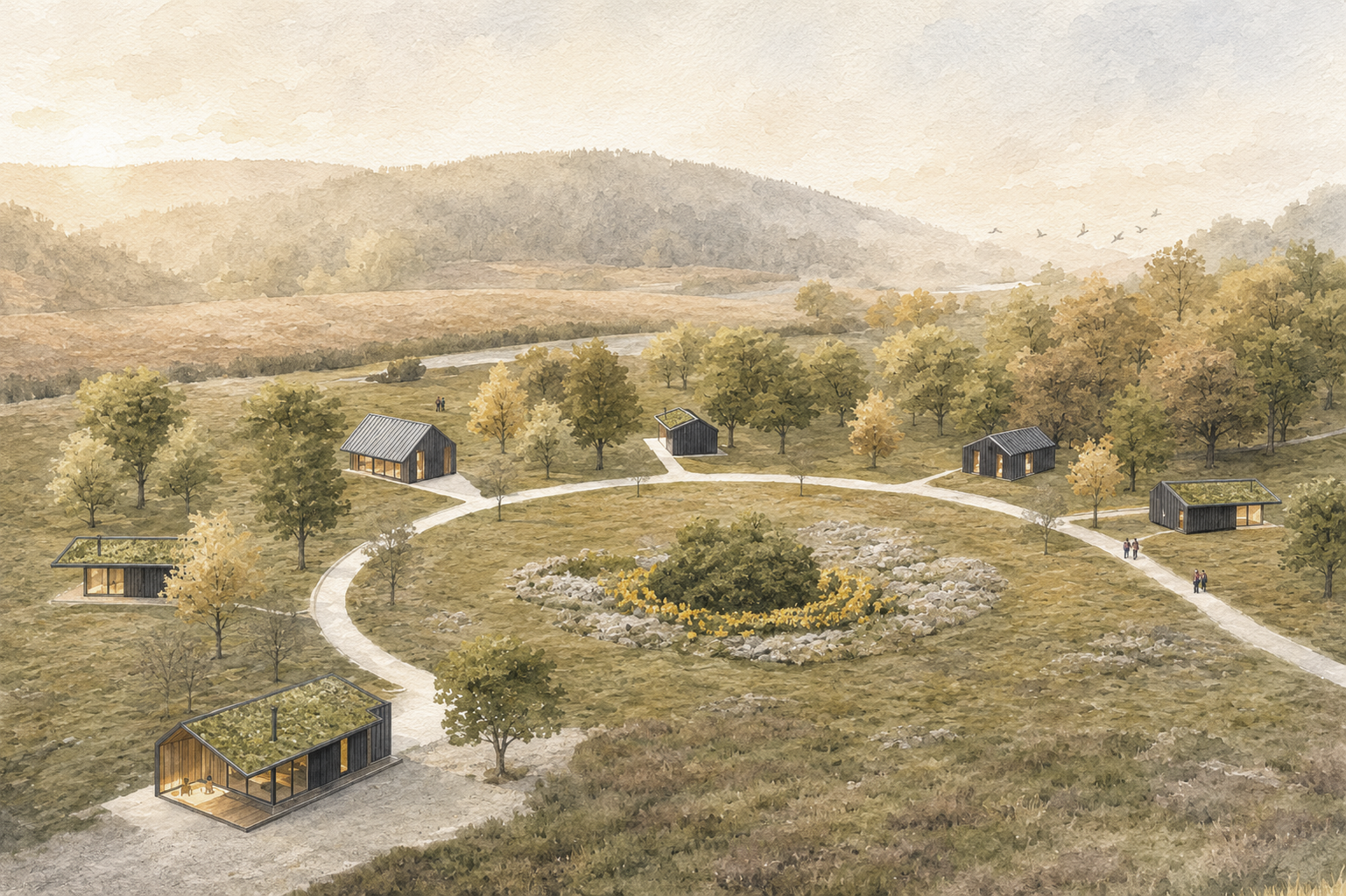
The wider masterplan arranges the cabins as a dispersed series of architectural objects connected by meandering pathways, preserving openness across the site and encouraging a slower, more reflective interaction with the environment. Each cabin has been carefully orientated to maximise privacy, sunlight and long-range views while minimising visual impact within the wider setting.